 By Dan GoodingShareNewsweek is a Trust Project member
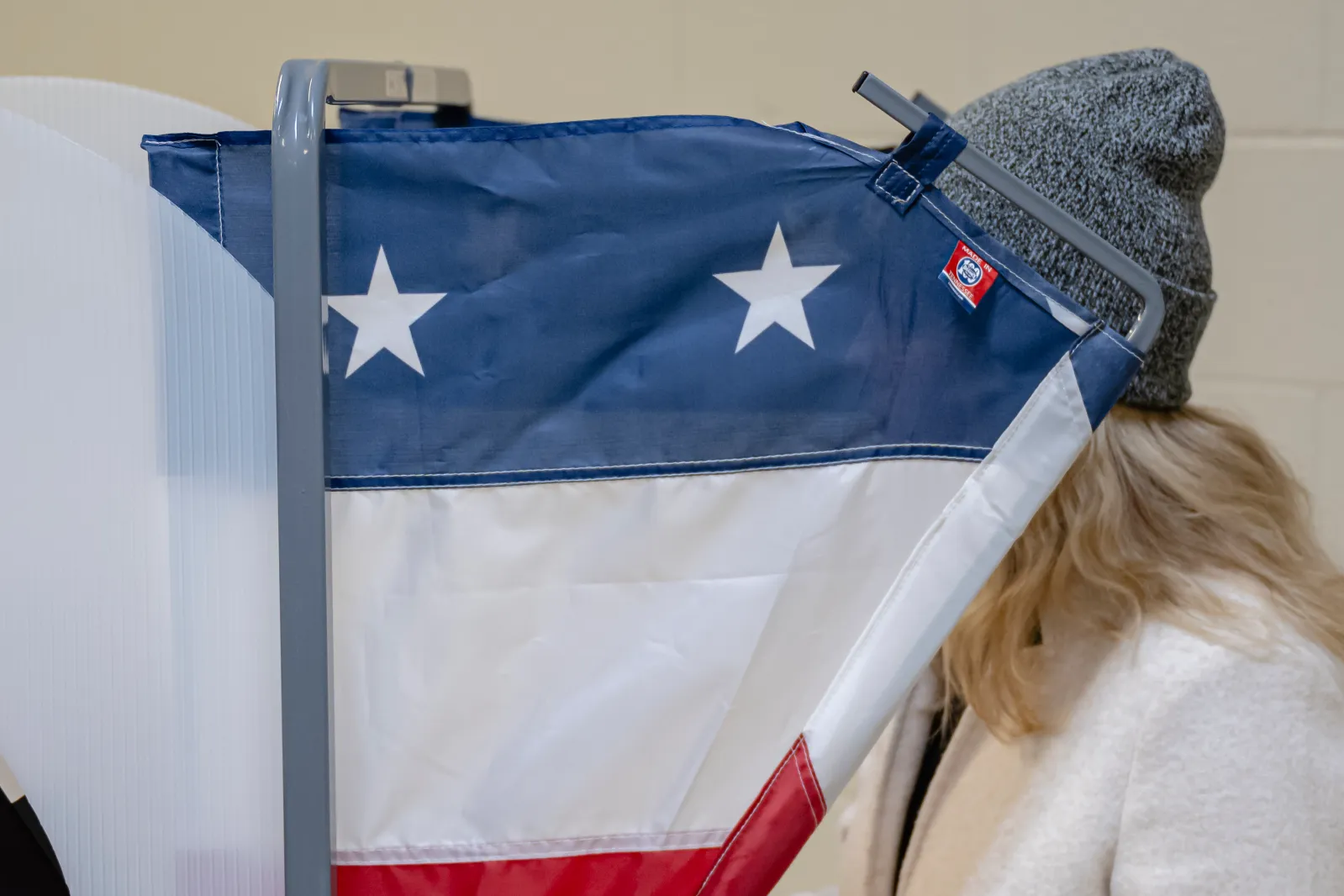
A federal judge on Friday blocked elements of President Donald Trump’s executive order requiring citizenship verification in order to vote in U.S. elections.
In a 110-page ruling, U.S. District Judge for the District of Columbia Colleen Kollar-Kotelly struck down two parts of the order that was challenged in three separate lawsuits.
“Our Constitution does not allow the President to impose unilateral changes to federal election procedures,” Kollar-Kotelly wrote.
Newsweek reached out to the White House for comment via email Friday afternoon.
Why It Matters
For several years, particularly following the 2020 election, Trump has alleged widespread voter fraud in the U.S. and that it's largely committed by those who are ineligible to vote—namely, immigrants. He has pushed for nationwide voter registration requirements, including proof of citizenship, but his plans were challenged in part due to concerns over the separation of powers.
 ...
...What To Know
The judge issued initial rulings on three cases brought by the League of United Latin American Citizens (LULAC), the Democratic National Convention and League of Women Voters Education Fund, all of whom represented various plaintiffs with worries triggered by Trump’s executive order signed in March 2025.
That executive order was framed as a means for multiple federal agencies to ensure elections were “honest and worthy of the public trust.” Part of the order gave the Election Assistance Commission 30 days to require those registering to vote in federal elections to prove U.S. citizenship.
Kollar-Kotelly, appointee of former President Bill Clinton, did not completely block the executive order Friday. She instead moved to prevent certain measures from being implemented, largely because she determined the president did not have constitutional power to change how elections operate. That power, she said, remained with Congress.
Along with the sweeping requirement to prove citizenship, Trump had also ordered the U.S. Department of Defense secretary to add a passport- or birth certificate-style proof of citizenship to Federal Post Card Applications used by the military and Americans living abroad.
The judge ruled that this violated the Uniformed and Overseas Citizens Absentee Voting Act, which is designed to make it easy for service members and U.S. citizens living abroad to vote.
Non-citizens are not permitted to register to vote for a majority of elections across the U.S. anyway, especially those at the federal level. There are some exceptions for lawful permanent residents at the local and state level.
Instances of voter fraud, i.e., cases where these rules have been broken, are rare. The Center for Election Innovation and Research found in July 2025 that in many instances, claims of widespread voter fraud often amounted to a far smaller number of genuine cases once data and voter rolls were analyzed.
Parts of the lawsuits dismissed for now related to plans to cut funding to states over voter form rules, as this was already blocked, and efforts to prevent states from counting late-arrival mail-in ballots, as this dealt with future, uncertain actions.
In Congress, GOP House Majority Leader Steve Scalise of Louisiana recently proposed an amendment that could require all voters to present a photo ID to cast their ballot.
What People Are Saying
Juan Proaño, CEO of LULAC, to Newsweek in a statement: "This decision defends a basic principle of our democracy: Congress and the states set the rules for federal elections. They are not dictated by unilateral decrees from the White House. The provisions the court blocked would have created new barriers and confusion for eligible voters, but the court reaffirmed that the president has no role to play in elections. LULAC will keep fighting any attempt to make voting harder by federal agencies."
Kollar-Kotelly, in her ruling Friday: "In our constitutional order, the President can neither make law nor rewrite the law that Congress has enacted... As this Court has explained at some length in two prior opinions in these consolidated cases, the President’s power is “at its lowest ebb” when he seeks to alter federal election regulations to require new methods of proving voter eligibility."
Scalise, on his plans to alter the SAVE Act to require voter ID: "I think a lot of Americans would like that protection because if they're following the rules, they just want everybody else to. What makes people angry is when you see boxes of ballots showing up two weeks after an election, and the next thing you know, lo and behold, a Democrat takes the lead after being behind for three weeks after Election Day."
What Happens Next
Kollar-Kotelly did note that the U.S. Supreme Court had taken up the Election Day deadline issue on mail-in ballots, and that its decision could generate a ripple effect on presidential powers regarding elections.
Request Reprint & LicensingSubmit CorrectionView Editorial & AI Guidelines Add Newsweek as a preferred source on Google to see more of our trusted coverage when you search.
Related Podcasts
Top Stories
 NewsSenate Passes Funding Package After Trump Immigration Enforcement Deal2 min read
 NewsCatherine O’Hara, Known for ‘Home Alone’ and ‘Schitt’s Creek’, Dead at 714 min read
 NewsDonald Trump Allegations in New Epstein Files Release: Read in Full7 min read
 For MembersNews‘Long For Change But Fear War’: Iranians Brace for US Attack15 min read
 NewsDon Lemon Arrested Over Anti-ICE Protest at Minnesota Church7 min read
 For MembersNewsUncommon Knowledge: Why Fat Polar Bears Are Trump’s Climate Ambassadors4 min read
Trending
 WeatherOld Farmer’s Almanac Predicts February Weather in Each State5 min read
 College FootballSad News Surfaces on Famed Notre Dame Coach Lou Holtz3 min read
 phoneWoman Accidentally Takes Pocket Photo—Internet Shocked by What’s Captured3 min read
 US PoliticsJasmine Crockett’s Chances of Beating James Talarico in Texas Primary—Poll6 min read
 TaxTaxpayers Issued Warning For 2026 IRS Filing Season4 min read
Opinion
 OpinionTrump Awards Don Lemon Journalism’s Highest Honor | Opinion4 min read
 OpinionCongress Can Make Shutdowns a Thing of the Past | Opinion6 min read
 OpinionWho Is the Real Kanye West? | Opinion5 min read
 OpinionIs Saudi Arabia Drifting Away From the U.S.? | Opinion5 min read
 OpinionThe Rise of the New Confederacy5 min read